In this project, my team and I explore how varying geometric parameters of an airfoil influence its aerodynamic performance. To track performance, we use both XFLR5 (computational airfoil simulation) and our school's wind tunnel to collect data and analyze it with MATLAB.
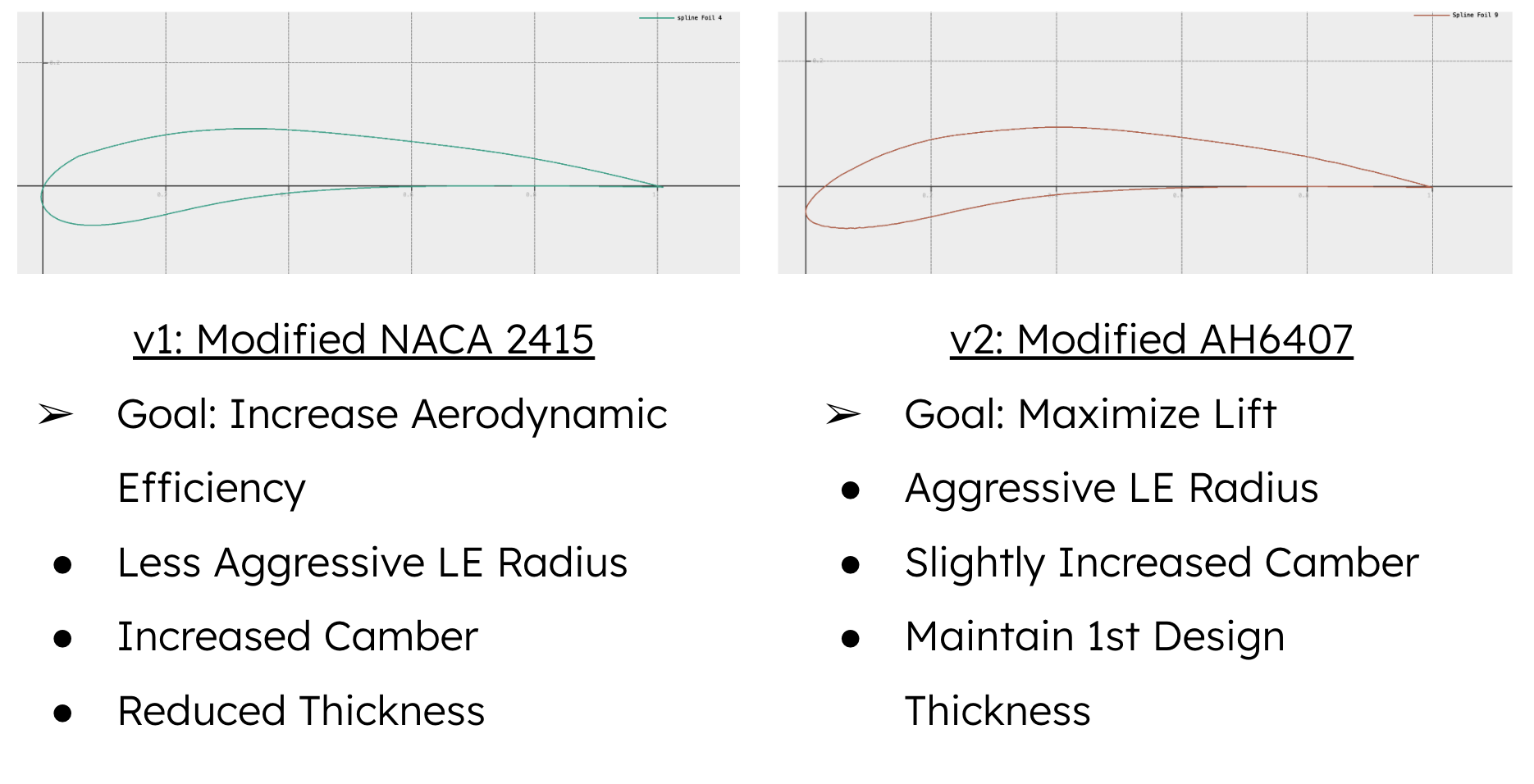
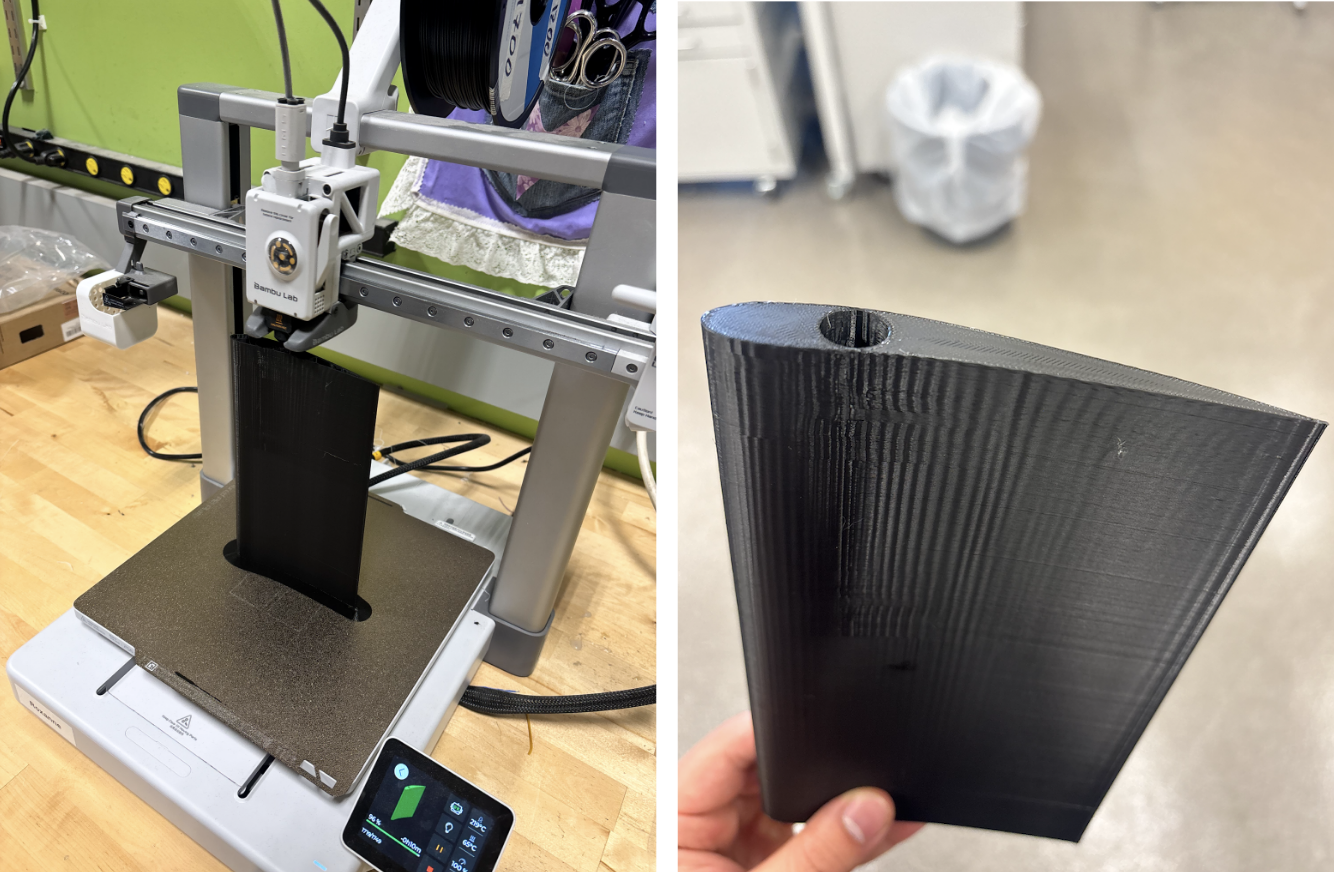
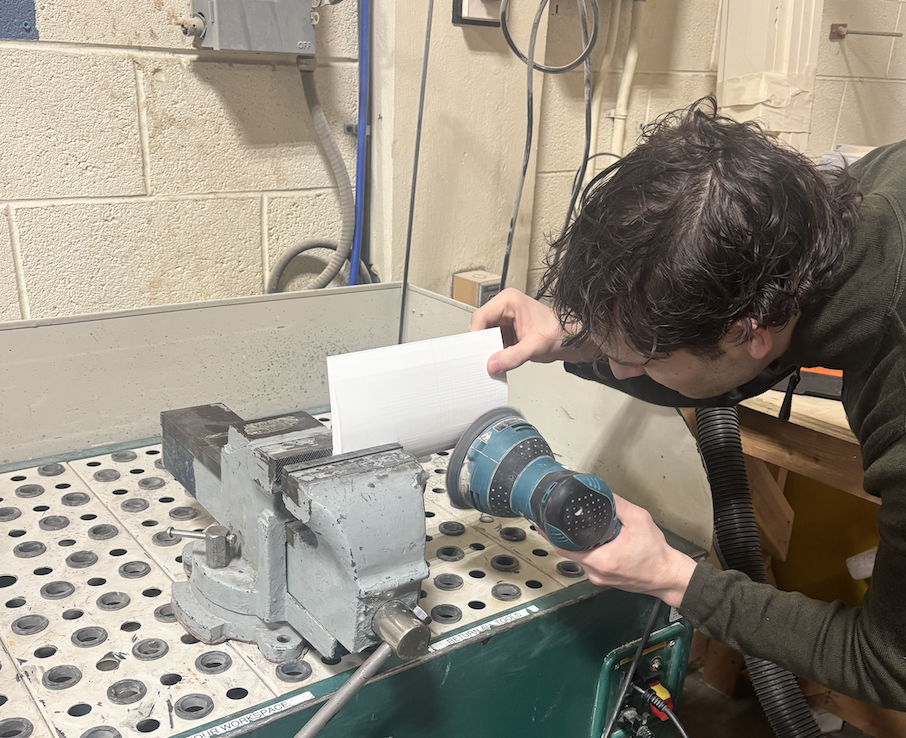
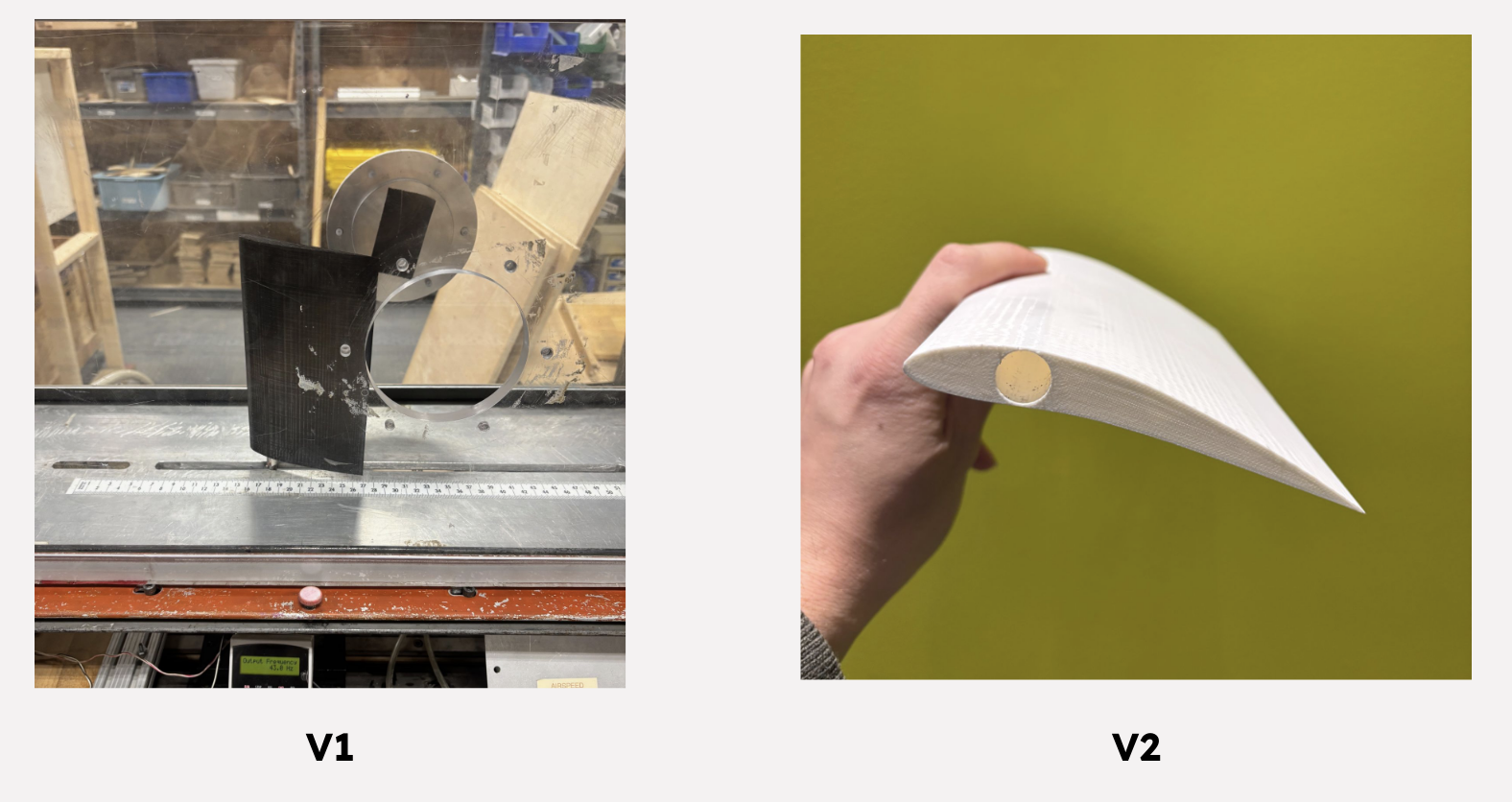
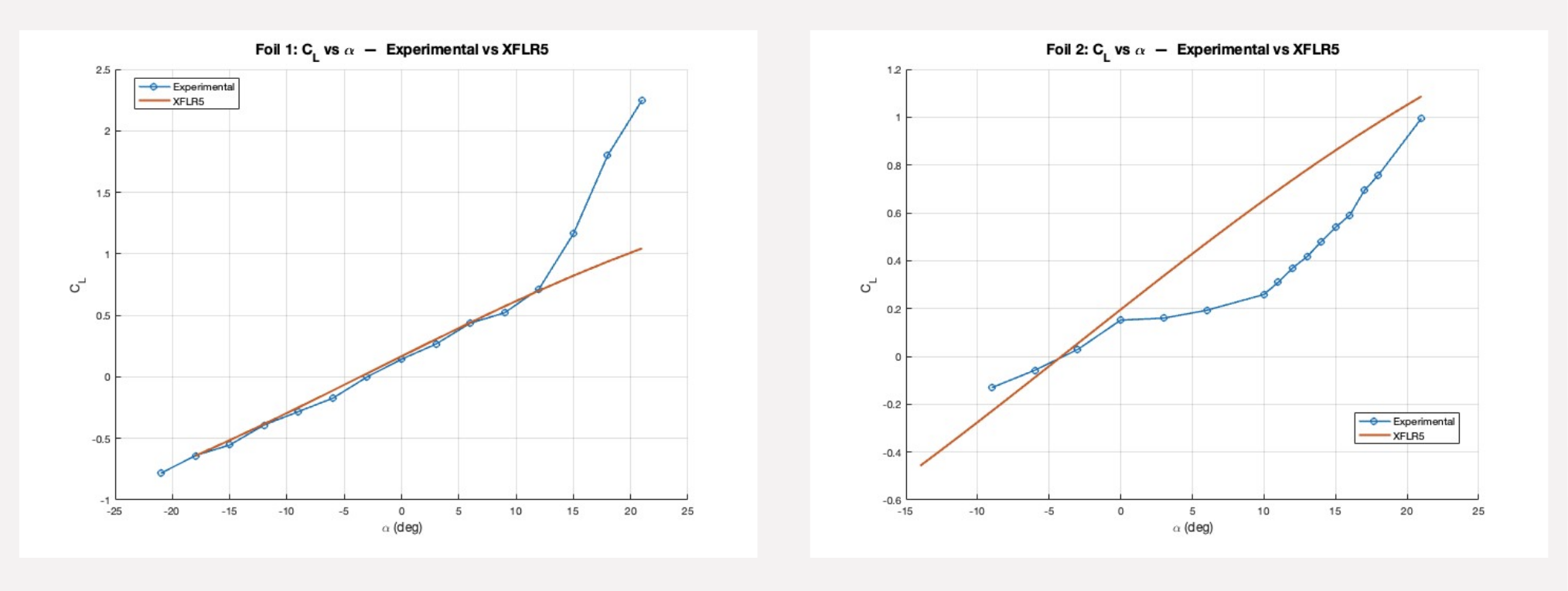
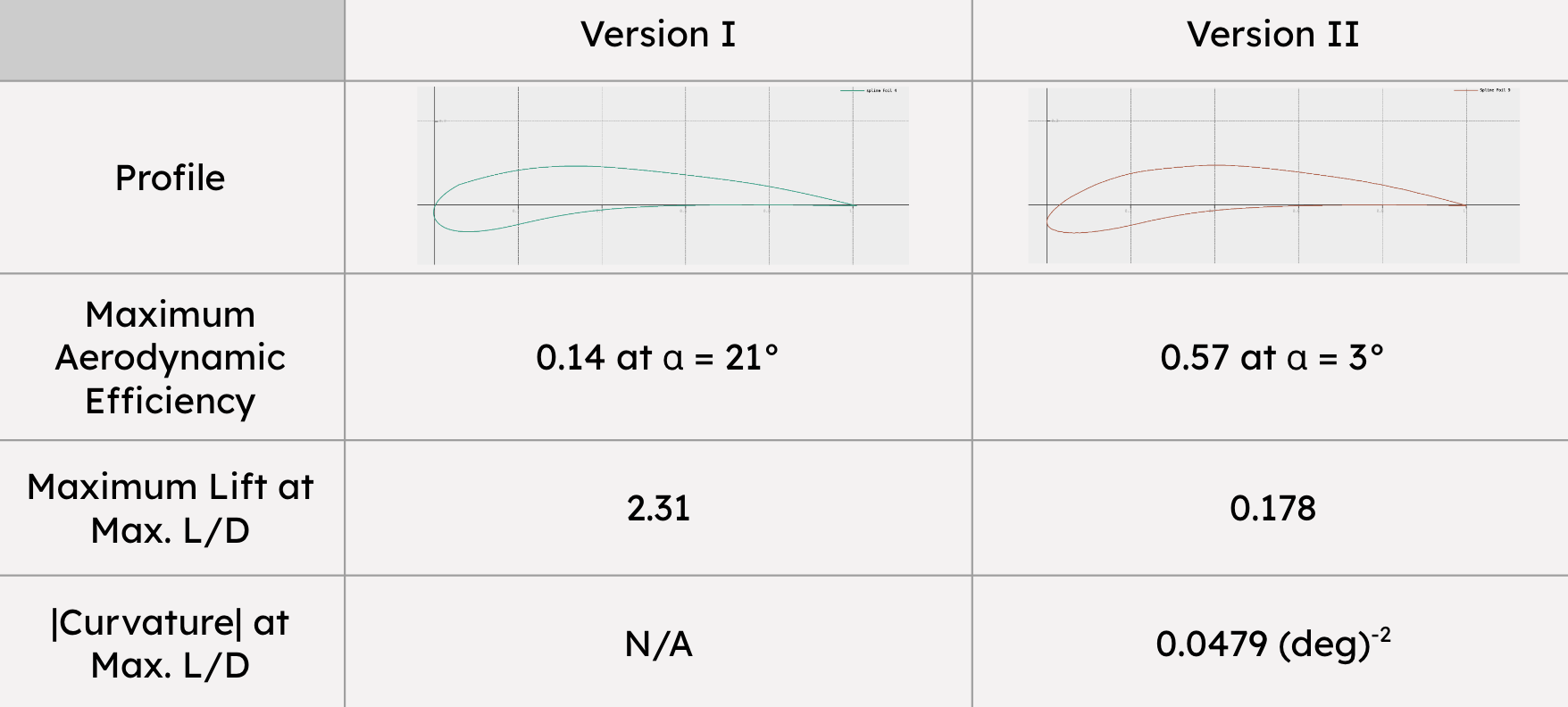
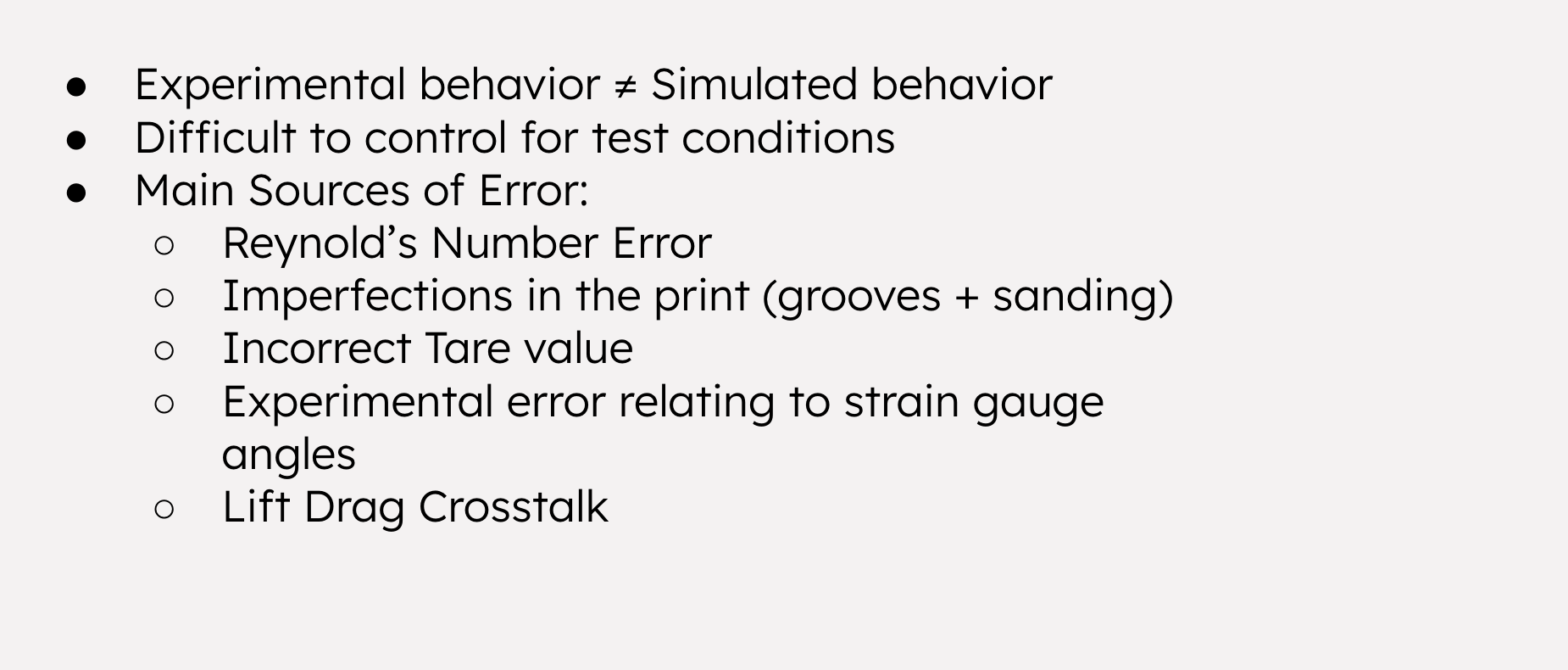
We started with a baseline NACA 2415 and AH6407 airfoil. We then changed their properties (primarily leading edge radius, camber, and thickness) to improve their lift and efficiency. Preliminary testing consisted of 30+ computerized simulations via XFLR5 at 10m/s wind speed.After XFLR5 testing, we wanted to validate our results through physical testing. So we 3D printed both the modified 2415 and AH6407.Post processing: We sanded the airfoils to reduce surface roughness, which would create drag.Final modified NACA 2415 (black) and AH6407 (white) prints.Lift coefficient to angle of attack for both airfoils, including both XFLR5 and experimental data.Final profiles and performance numbers. We achieved 300%+ improvement in L/D ratio for our v2 AH6407 design over v1 NACA 2415.Lessons and limitations: include the fact that simulated behavior is optimistic and often can not account for real world factors. Experimental data was also flawed due to our strain gauge, proving that physical testing can be much harder to control than simulated testing.